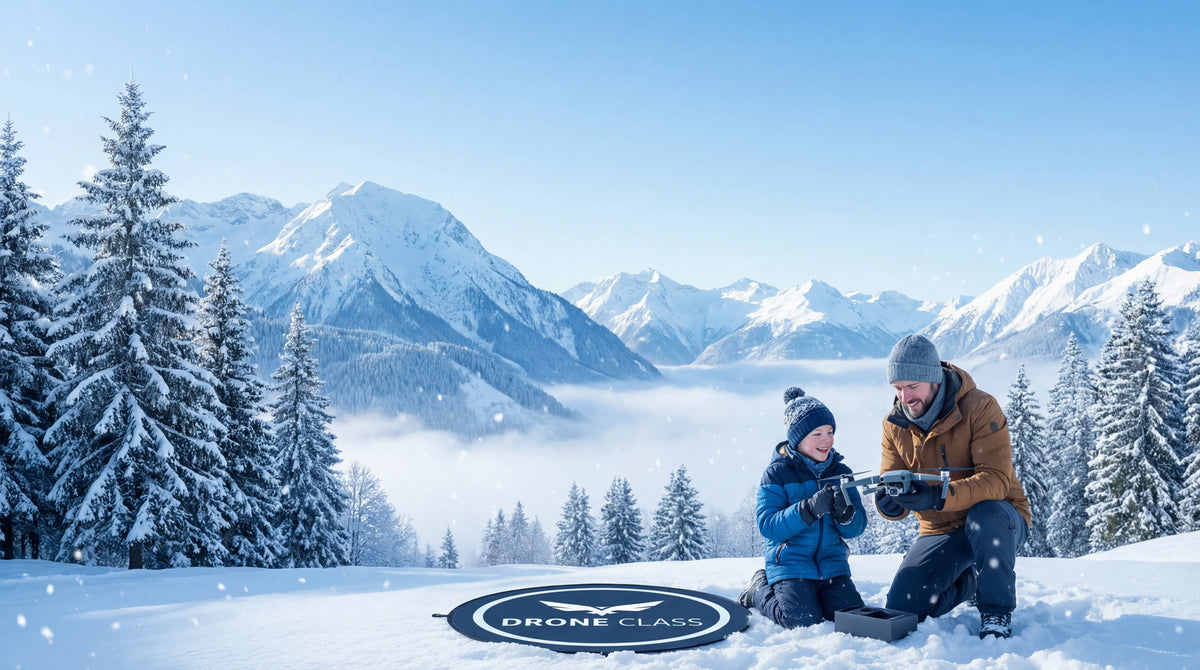

A medida que los meses de invierno hacen su aparición, se abren oportunidades para realizar hermosas tomas con drones en invierno. Al volar tu dron en condiciones invernales, puedes enfrentarte a desafíos. Si vas a sacar tu dron este invierno durante la práctica de deportes de invierno o cuando el tiempo invernal esté en Holanda, lee antes nuestros cinco consejos para volar drones en condiciones invernales.
Flying a drone in winter: the tips at a glance
Here is how to fly safely in the cold and capture the best winter footage.
1. Calienta las baterías del dron
It's not your drone but the batteries that have trouble functioning in cold temperatures. Therefore, always store your batteries in a warm place, such as in your car or jacket pocket. Place the batteries in the drone just before you take off. When you have taken off, it is best to let the drone hover for 60 seconds to allow the battery to warm up. Keep in mind that in cold temperatures, flight time decreases slightly.

Not sure which drone license you need?
Choose your drone, or its weight or class label, and see right away which certificate you need.
2. Evite volar con niebla (espesa)
According to European legislation, it is only allowed to fly VLOS in the open category. This means you must always fly the drone in direct vision. It is not allowed to fly in or above thick fog that prevents you from seeing your drone. Fog causes a lot of water on the drone. With cold temperatures, the fog can also create ice crystals on the propellers and camera. This can damage the drone. We therefore recommend avoiding fog altogether.

3. Evitar la condensación tras el vuelo del dron
Cuando has volado tu dron en el frío, se puede formar condensación en el dron y en el controlador después de volar. Esto ocurre cuando llevas el dron en un coche caliente o lo guardas en un lugar cálido de la casa después de volar. El mejor consejo es calentar el dron lentamente y secarlo varias veces antes de guardarlo.

4. Utilizar una pista de aterrizaje
El despegue desde una superficie fría o húmeda no es óptimo. Por lo tanto, recomendamos utilizar una pista de aterrizaje. Puede despegar y aterrizar más fácilmente en terreno llano o con nieve. Además, es bueno tener un punto de aterrizaje alternativo detrás de ti, en caso de que las condiciones meteorológicas sean difíciles.

5. Mantenerse caliente
Use gloves so that your hands and fingers do not cramp due to the cold. Gloves are available that allow you to continue using the controller's touch screen. It is allowed to fly the drone from a car. However, you must fly the drone in direct vision.

Consejos generales para el vuelo de drones
In whatever weather you go flying, always make sure you have the following items in order:
- Cumpla la normativa europea sobre vuelos de drones
- Regístrese como operador, coloque el número de forma visible en el dron y difúndalo cuando sea necesario a través de Remote-ID.
- Debe poder mostrar su licencia de dron de la UE, que puede ser una versión digital o impresa.
¡Mucha diversión con drones este invierno!
Not sure which drone license you need?
Choose your drone, or its weight or class label, and see right away which certificate you need.