
The four basic settings for sharp drone photos: ISO 100, shutter speed 1/250 of a second, aperture f/4 (if your drone offers this) and manual white balance set to 5500 Kelvin. Switch off automatic mode as soon as you want to take photography seriously; auto mode often selects the wrong settings at sunset, in bright sunlight or in cloudy weather.
In this short guide, you can read about what each setting does. Here are our tips for taking stunning drone photos.

ISO: the basic sensitivity
ISO determines how sensitive the sensor is to light. A low ISO results in less noise and therefore a sharper image. A high ISO allows you to take photos in the dark, but introduces grain.
Rule of thumb: ISO 100 during the day, ISO 200–400 at sunrise or sunset. Above ISO 400, noise becomes visible on smaller drones (Mini, Avata).
Shutter speed: freeze or blur
Shutter speed determines how long the sensor captures light. Too slow = motion blur from your hovering drone. Too fast = underexposure.
Rule of thumb: 1/250 of a second for standard photography. In winds above 4 m/s, increase to 1/500s to prevent motion blur.
Nu știi sigur de ce licență ai nevoie?
Aperture: Variable on top-of-the-range models
The aperture controls how much light passes through the lens. This is only adjustable on the DJI Mavic 4 Pro and DJI Inspire 3. On smaller drones (Mini 5 Pro, Air 3S, Avata 2), the lens has a fixed aperture.
Rule of thumb for adjustable aperture: f/4 for maximum sharpness. f/2.8 for low light. Avoid f/8+ due to diffraction.
White balance: colour temperature
White balance determines whether ‘white’ in your photo actually looks white. Measured in Kelvin (K): lower = warmer, higher = cooler.
Rule of thumb: 5500K for standard daylight. At sunset, however, do not use auto white balance — it ‘corrects’ the warm orange tones away. Set it manually to 5500–6500K to preserve the magic.

Drone camera settings: standard daylight
Copy and paste these settings for most daylight situations. A good starting point from which to experiment further.
|
Mode |
Manual (M) |
|
ISO |
100 |
|
Shutter speed |
1/250s |
|
Deschidere |
f/4 (if variable) |
|
White balance |
5500K (daylight) |
|
File format |
DNG (RAW) + JPG |
These are the basic settings. For the real photography challenges – sunsets by the coast, top-down shots over water, the blue hour, slow shutter speeds with an ND filter, HDR stacking, colour grading and reading histograms – general rules of thumb won’t cut it.
Learn more at Drone Class Plus
That’s where Drone Class Plus comes in. A drone community for enthusiastic pilots offering:
- Comprehensive information on drone camera settings and how to achieve perfect exposure.
- Tips on composition and drone manoeuvres so you can capture stunning footage.
- Inspiration from other drone pilots: view their photos, drone settings, drone type and location.
- Practical information: weather forecasts for drone pilots, drone maps, information on flying locations, etc.
With Drone Class Plus, you’re guaranteed interesting (online) courses, such as photography, videography and visual inspections. We also organise in-person activities for drone pilots, such as flying afternoons and excursions.
Frequently asked questions
What are the best camera settings for drone photography?
ISO 100 during the day (200–400 during the golden hour), shutter speed 1/250s, aperture f/4 if adjustable, white balance set manually to 5500K. Always shoot in DNG/RAW.
What is the best ISO for a drone?
The lowest possible ISO that your shutter speed allows. Standard ISO 100 during the day. Above ISO 400, noise becomes visible on smaller drones.
What shutter speed for drone photos?
1/250 of a second for standard photography. Faster in windy conditions (1/500s). Slower with an ND filter for soft water effects.
Should I shoot in RAW or JPG?
Always DNG/RAW. This gives you 70% more editable data and the ability to adjust white balance, shadows and colours in post-processing without any loss of quality.
What’s the best time for drone photography?
The golden hour: the first hour after sunrise and the last hour before sunset. Warm, low light with dramatic shadows.
Summer is here. Traditionally, this is the time to start thinking about buying a drone. Especially if, like us, you see stunning holiday snaps online. But what actually makes the ideal drone shot?
Subiect
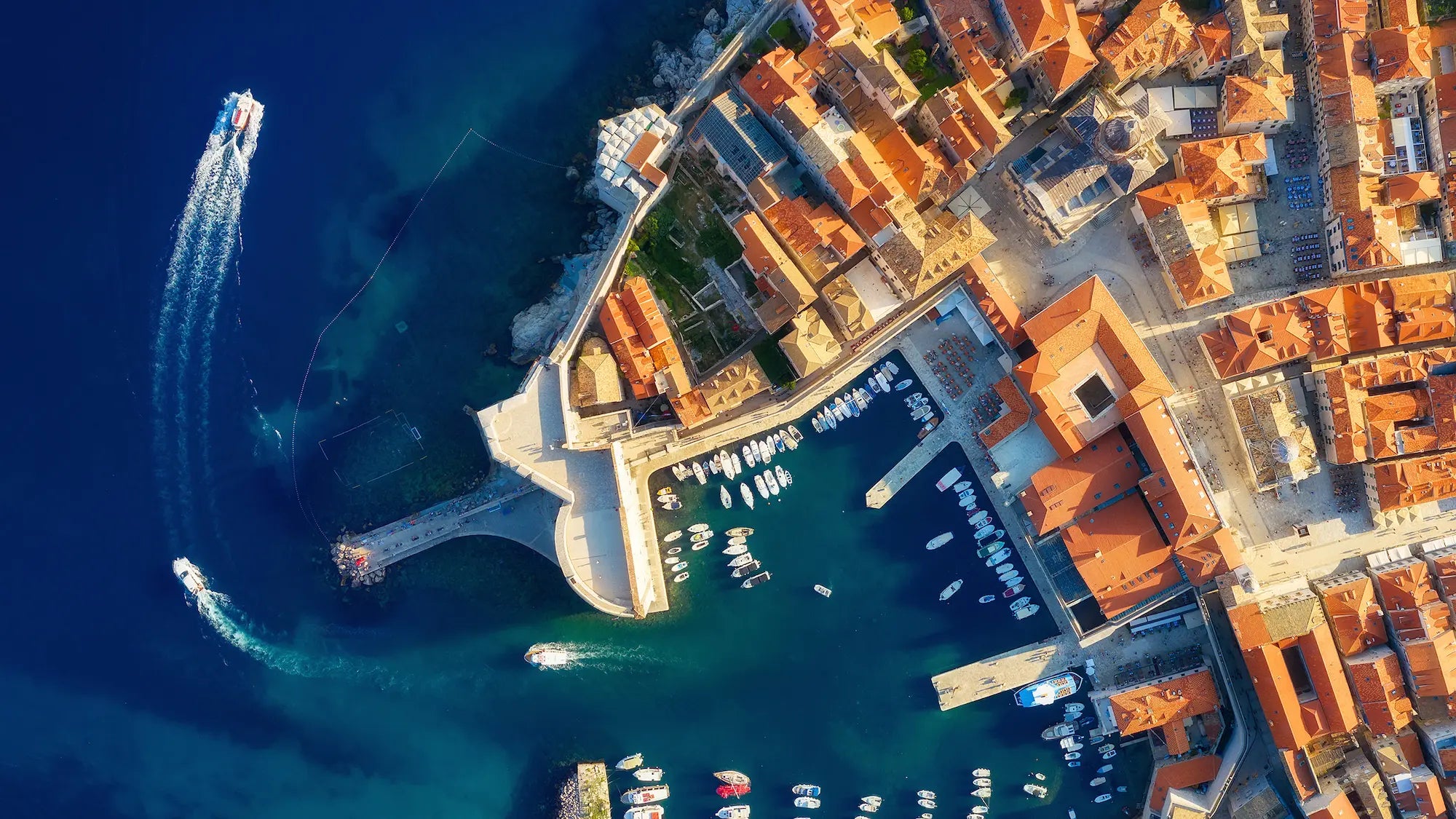
A photo evokes feelings and associations. Looking at the cover of this blog, you might think of: sun, sea, leisure, good food and enjoyment. What kind of feeling and association do you want to evoke with a photo?
Composition
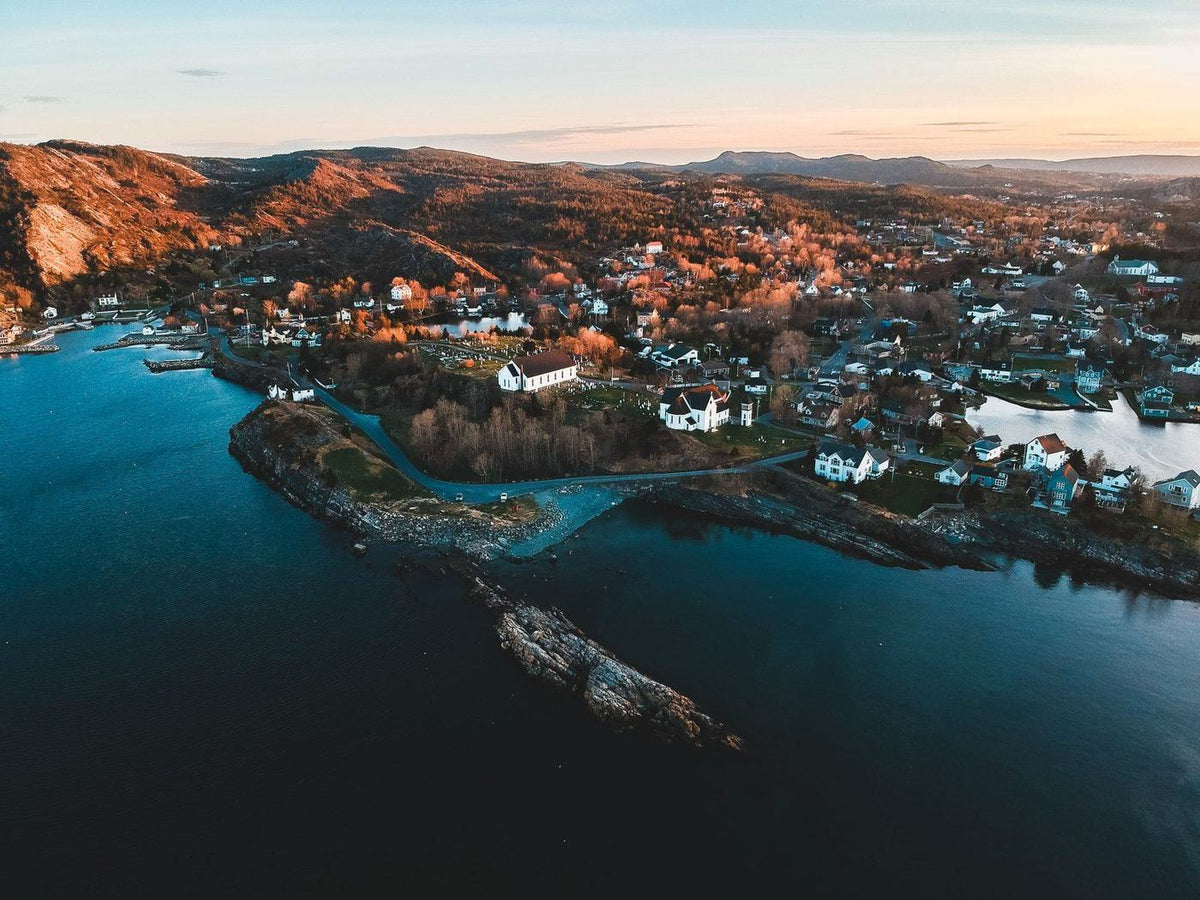
A photo needs something to make it stand out. If that isn’t (necessarily) the subject of the photo, then it could be the composition – in other words, the arrangement of what’s visible in the shot. For example: horizontal lines, symmetry or simply simplicity. From the air, you can see patterns, textures and the positioning of objects that might be worth photographing.
Light
A common mistake is to always rely on the camera’s default settings. Tip: try setting your camera to manual mode. Keep the ISO value as low as possible during the day (to minimise noise). Experiment with the aperture to create a blurred background, for example. Also try varying the shutter speed to capture movement in the photo.

You can find a number of tips on the Filtergrade blog.

Colours
Another way to make a photo stand out is by playing with colours. These may already be present naturally at your location. The changing light from the sun can create subtle differences. Or would you prefer to make a statement by shooting in black and white? A photo can be digitally edited afterwards using, for example, Lightroom.
Originality
See if you can photograph a familiar spot from a different angle.
Ethical considerations
There’s no accounting for taste. In that respect, of course, there’s no such thing as the ideal drone shot. Do bear in mind where you’re allowed to fly, though. Sometimes a permit is required. Also, spare a thought for the privacy of bystanders. This will really put the finishing touches to your production.
Ready to shoot? Take part in our competitions
At Drone Class Plus, we encourage you to take footage and… submit it! There are various competitions on our platform that you can enter.