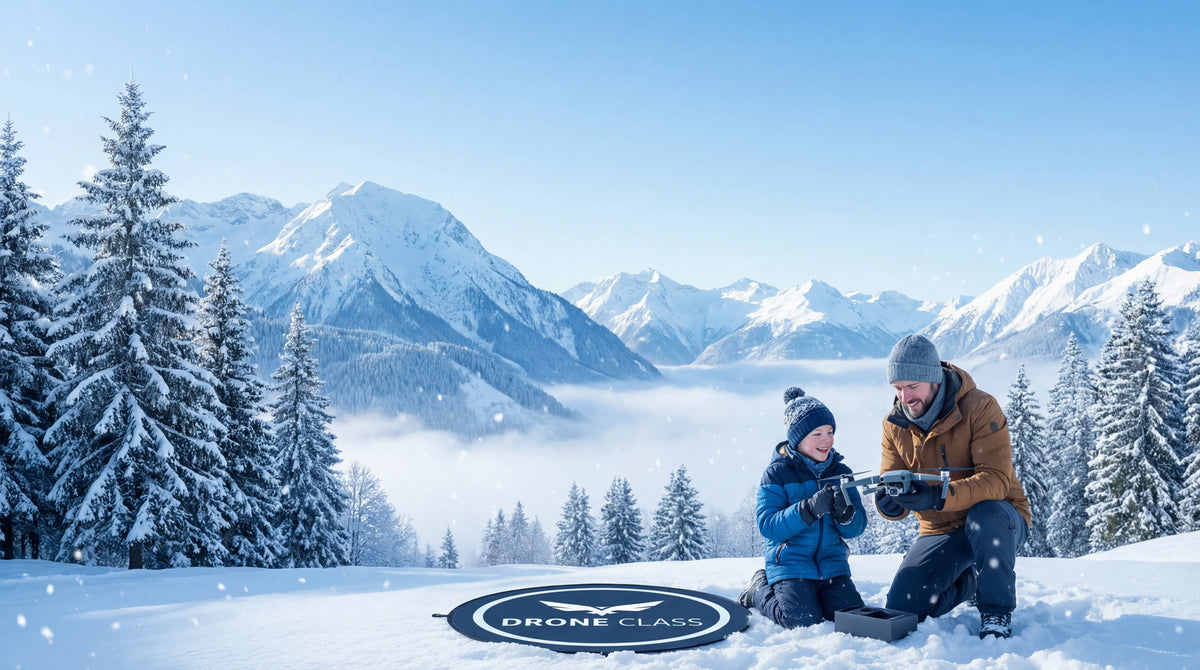

Avec l'arrivée des mois d'hiver, les opportunités de réaliser de belles prises de vue hivernales avec un drone s'ouvrent à vous. Lorsque vous faites voler votre drone dans des conditions hivernales, vous pouvez être confronté à des défis. Si vous comptez sortir votre drone cet hiver pour pratiquer des sports d'hiver ou lorsque le temps hivernal est aux Pays-Bas, lisez d'abord nos cinq conseils pour faire voler votre drone dans des conditions hivernales.
Flying a drone in winter: the tips at a glance
Here is how to fly safely in the cold and capture the best winter footage.
1. Réchauffer les batteries du drone
It's not your drone but the batteries that have trouble functioning in cold temperatures. Therefore, always store your batteries in a warm place, such as in your car or jacket pocket. Place the batteries in the drone just before you take off. When you have taken off, it is best to let the drone hover for 60 seconds to allow the battery to warm up. Keep in mind that in cold temperatures, flight time decreases slightly.

Not sure which drone license you need?
Choose your drone, or its weight or class label, and see right away which certificate you need.
2. Éviter de voler dans un brouillard (épais)
According to European legislation, it is only allowed to fly VLOS in the open category. This means you must always fly the drone in direct vision. It is not allowed to fly in or above thick fog that prevents you from seeing your drone. Fog causes a lot of water on the drone. With cold temperatures, the fog can also create ice crystals on the propellers and camera. This can damage the drone. We therefore recommend avoiding fog altogether.

3. Éviter la condensation après le vol du drone
Lorsque vous avez fait voler votre drone dans le froid, de la condensation peut se former sur le drone et le contrôleur après le vol. Cela se produit lorsque vous transportez votre drone dans une voiture chaude ou que vous le rangez dans un endroit chaud de la maison après le vol. Le meilleur conseil est de réchauffer lentement le drone et de le sécher plusieurs fois avant de le ranger.

4. Utiliser une plate-forme d'atterrissage
Le décollage à partir d'une surface froide ou humide n'est pas optimal. Il est donc recommandé d'utiliser une plate-forme d'atterrissage. Le décollage et l'atterrissage sont plus faciles sur un terrain plat ou sur la neige. En outre, il est bon d'avoir un autre point d'atterrissage derrière soi, si les conditions météorologiques sont difficiles.

5. Se réchauffer
Use gloves so that your hands and fingers do not cramp due to the cold. Gloves are available that allow you to continue using the controller's touch screen. It is allowed to fly the drone from a car. However, you must fly the drone in direct vision.

Conseils généraux pour le vol des drones
In whatever weather you go flying, always make sure you have the following items in order:
- Respecter les règles européennes en matière de vols de drones
- Enregistrez-vous en tant qu'opérateur, apposez le numéro de manière visible sur le drone et diffusez-le en cas de besoin via Remote-ID.
- Vous devez être en mesure de présenter votre licence de drone de l'UE, qui peut être une version numérique ou imprimée.
Beaucoup de plaisir avec les drones cet hiver !
Not sure which drone license you need?
Choose your drone, or its weight or class label, and see right away which certificate you need.