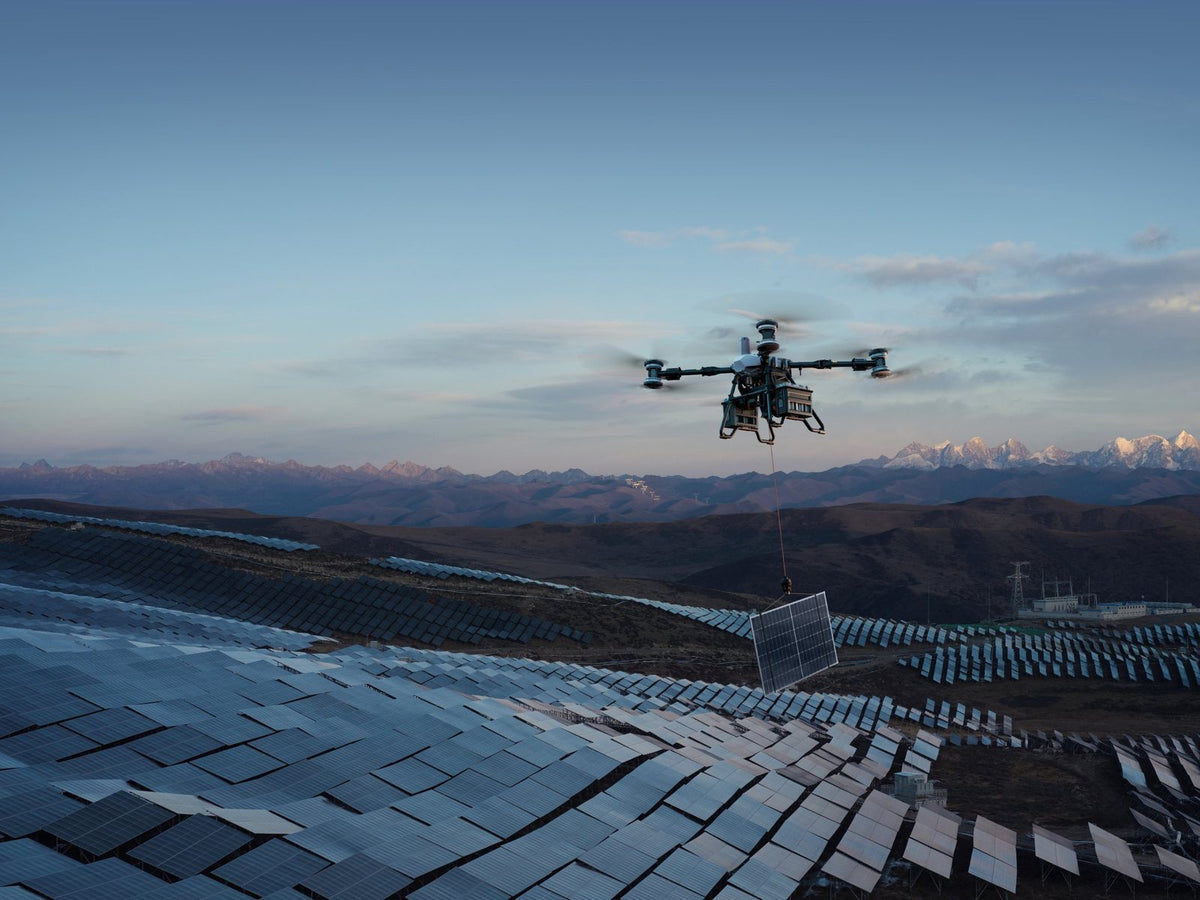
Ever larger cargo drones carry heavy loads to places a crane can hardly reach. A heavy lift drone can carry loads of up to 200 kg. Because a drone covers distances easily, this can be an advantage over a crane. We dived into this development, in which a Dutch company is a frontrunner in this market.
What is a heavy lift drone?
Most people know drones as small, light aircraft for photography and videography. Drones have long since stopped being just a camera device. The professional applications for drones are growing fast. The heavy lift drone was developed to transport materials quickly and easily.
The technology comes from a practical angle. The Italian company FlyingBasket started in 2015 by supplying mountain huts in South Tyrol, where every delivery had to be made by cable car or on foot. That company now has more than 6,500 flights on the clock and flies in the energy, telecom and construction sectors across Europe.
Dutch frontrunner: Drone Lift from Groningen
In early 2025, Joris Binnema and Willem Wagenaar founded the company Drone Lift in Groningen. Their mission: to bring heavy loads to hard-to-reach places, without a crane, helicopter or heavy equipment. In April 2025, they made the first Dutch flight with a cargo drone of this size in the Eemshaven.
Drone Lift flies the FlyingBasket FB3, which lifts up to 100 kilos, and the newer FB4 for even heavier jobs. The latest aircraft lift up to 200 kilos, while the drone itself weighs a fraction of that.
|
Feature |
What it can do |
|
Lifting capacity |
Up to 200 kilos |
|
Gama |
Up to 16 kilometres |
|
Propulsion |
Fully electric, so quiet and clean |
|
Precision |
Placement accurate to around 1 centimetre (GPS and RTK) |
|
Authorisation |
Flies under an operational authorisation (SORA) in the specific category |

¿No sabes qué licencia necesitas?
What is the advantage of a drone over a crane?
A crane or helicopter remains unbeatable for really heavy work. But for the category below that, loads of up to a few hundred kilos in a tricky spot, the drone has strong trump cards.
Where the drone wins
● Accessibility. A drone flies over water, forest or rough terrain where a crane simply can't go.
● Speed and cost. No need to hire a crane vessel or heavy transport for a single job.
● Cleaner and quieter. Fully electric, so less emissions and noise than a helicopter.
● Precision. With RTK, the drone places a load with centimetre accuracy
It remains work for specialists. The heavy load makes correcting the flight more difficult: Drone Lift compares the controls to the work of a crane operator. Weather, wind and battery capacity determine what is possible, and for the really heavy lifting the crane remains king for now.
Am I allowed to transport materials with a drone?
A drone weighing tens of kilos holding a heavy load above the ground: this is just about the heaviest thing you can do with a drone. It goes without saying that this is not allowed in the open category.
Drones heavier than 25 kilos fall under strict rules. This work takes place entirely in the specific category, with an operational authorisation based on a risk assessment (SORA). At Drone Lift, that authorisation is held by sister company Drone Visual. Every flight is calculated and planned in advance, which is exactly what the specific category is intended for.
It also shows where professional drone work is heading. The market is not in toys, but in serious jobs that demand craftsmanship. And that craftsmanship always starts with the basics: knowledge of the rules and the EU drone certificate. From there you move on to the specific category.

Flying drones professionally
Heavy-lift is just one of the many directions in which professional drone work is growing. Drones are popping up in the most diverse professions, often in places where the work would otherwise be dangerous, expensive or simply impossible. Two striking examples:
Switzerland: the drone as piste manager
In the Swiss ski resort of Melchsee-Frutt, the first flying piste manager recently took to the skies. From a DJI Dock 3, a docking station on the mountain, a drone automatically takes off every day to check the pistes, the snow cannons and the ski lifts. With a thermal camera it measures the temperature of the snow from the cannons and looks for ice on the lifts, and with the zoom it spots wear or defects in the lift mechanism. Inspections that used to take a lot of time and manpower are now done in minutes. Even cold and wind don't bother the aircraft.
Rotterdam: the drone as window cleaner
Closer to home, Rotterdam saw a first this year: a drone cleaning the windows of the Euromast at great height. Work that would otherwise require dangerous abseiling or an expensive aerial work platform is now done by the drone from the air. Exactly the kind of job for which a drone is the ideal solution.

Frequently asked questions about flying cargo drones
How much can a drone lift?
Ordinary consumer drones only carry their own camera. Professional heavy-lift or cargo drones lift much more: models such as the FlyingBasket FB3 up to 100 kilos, and the newer aircraft up to 200 kilos. Work is already underway on drones that are to carry 500 kilos.
Can a drone replace a crane?
For lighter loads in hard-to-reach places, often yes. A drone gets across water, forest and rough terrain where a crane can't go, is electric and places loads accurately. For the really heavy lifting, the crane remains indispensable for now.
Which rules apply to heavy cargo drones?
Drones heavier than 25 kilos and flights with an increased risk fall under the specific category. This requires an operational authorisation, based on a risk assessment (SORA), plus demonstrably competent pilots.
Can I fly such a heavy drone myself?
Not just like that. This is specialist work in the specific category, with strict requirements for the pilot, the aircraft and the authorisation.