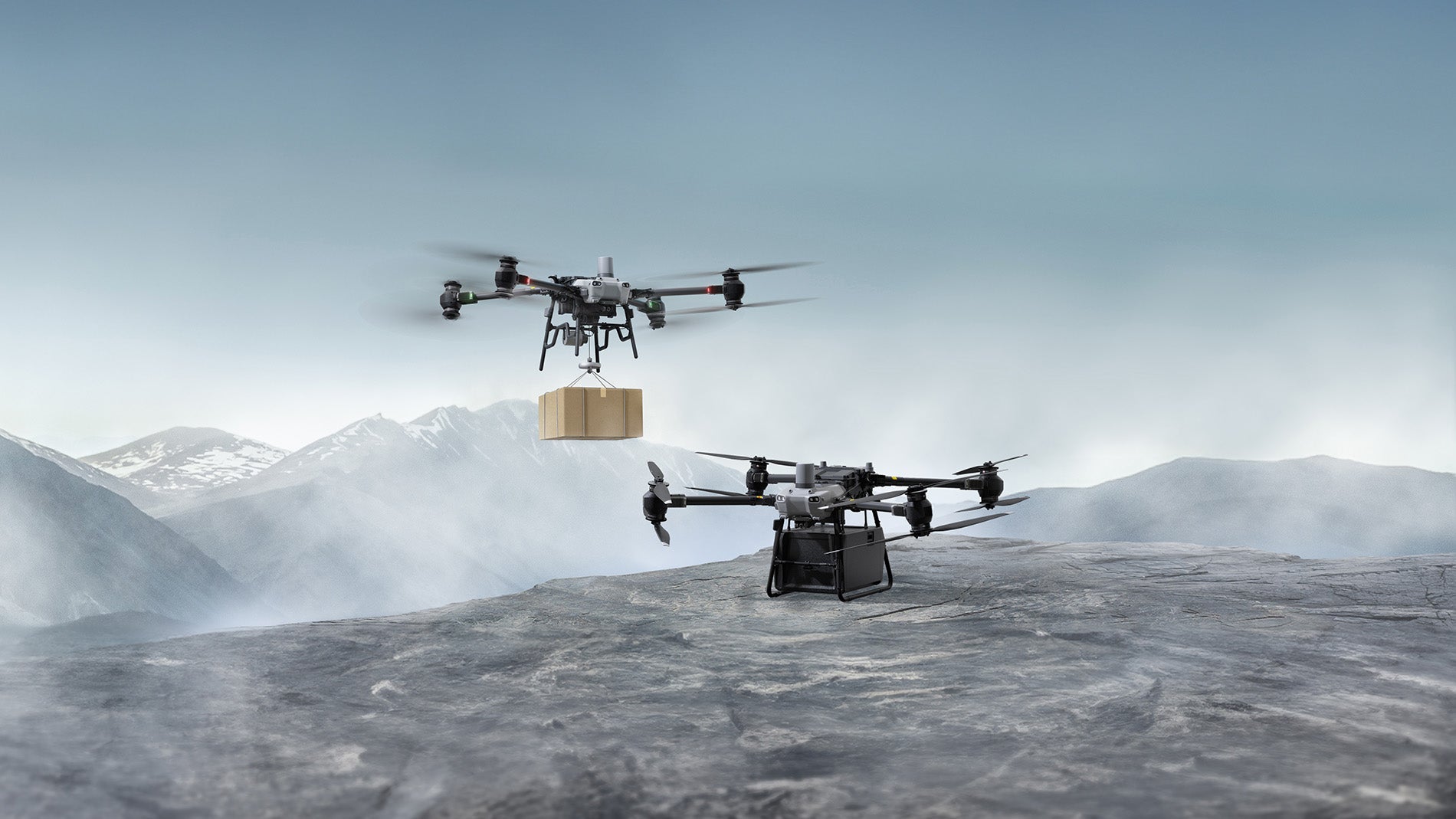

When mountaineers get into trouble on the highest mountain in the Alps, a drone can be deployed to support a rescue operation. The French Mont Blanc is popular with mountaineers. With an altitude of 4,806 metres, reaching the summit is a huge challenge. Weather conditions at the top are often extreme and change rapidly. It is therefore not uncommon for a rescue operation to be necessary when climbers are unable to continue. The DJI FlyCart 30 is used in these rescue operations.
How the DJI FlyCart 30 supports a rescue operation
The drone does not replace the rescue team, but is a valuable addition. The rescue team goes ahead. Once they have reached the victim, the drone can fly in with equipment. Whereas the rescue team previously had to carry a lot of equipment in a rucksack, this can now be transported by drone. The DJI FlyCart 30 transports medical equipment, ropes, anchors and radios, thermal kits and thermal blankets, among other things.
This means that the team can arrive at the scene faster and with less fatigue. Because rescue workers have to carry less weight, they can often reach the victim sooner. This saves valuable time and energy. The use of the DJI FlyCart 30 can also contribute to safer conditions, as the rescue team is more manoeuvrable with less equipment and therefore runs less risk if the rescue team cannot safely access the terrain.
Sometimes the terrain is too dangerous to enter. Heavy snow and ice can make the ground unstable, preventing the rescue team from working safely. In such cases, the DJI FlyCart 30 can deliver or drop a survival kit to the victim. This allows stranded climbers to quickly receive the first means of survival. For example, the drone can deliver a first aid kit, a thermal kit and other survival equipment. The video below shows how the rescue team uses this drone.
Why a drone and not a helicopter?
Helicopters often fly by sight. Challenging conditions, such as thick fog and low cloud cover, are common in high mountain areas. This sometimes makes flying a helicopter impossible. The DJI FlyCart 30, on the other hand, can fly a pre-programmed route. The drone can also remain operational in conditions where visibility is limited.

Nu știi sigur de ce licență ai nevoie?
What is the DJI FlyCart 30 and what exactly can it do?
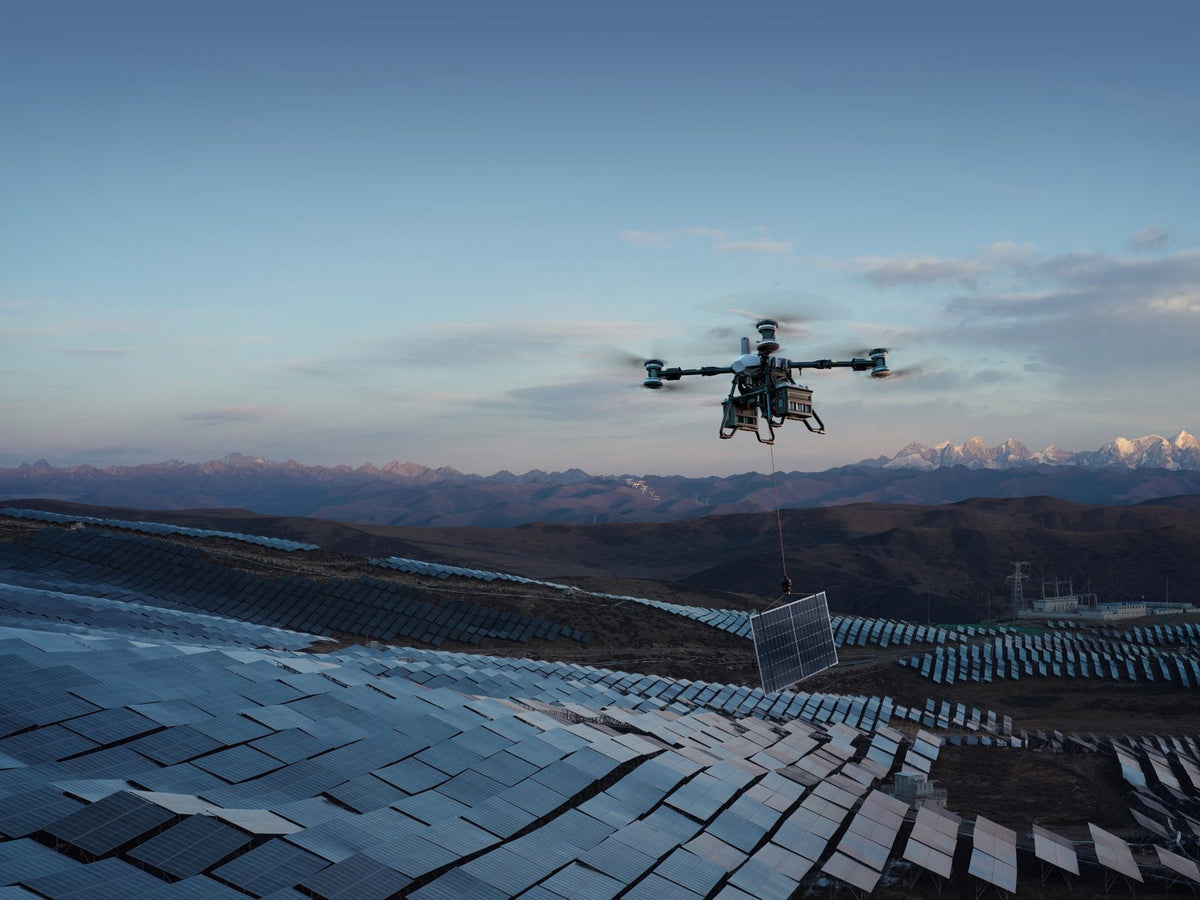
The DJI FlyCart 30 is a delivery drone that can transport and deliver packages. There are two ways to deliver: the drone can land, or it can lower the package in a controlled manner using a winch. This allows packages to be delivered even in difficult terrain. The maximum delivery weight is 40 kg (single battery). You can plan routes and missions in advance. The drone is designed for extreme conditions. It can operate at altitudes of up to approximately 6,000 metres and in temperatures ranging from -20 to 45 °C. The DJI FlyCart 30 has a range of up to 20 km.
Applications of drones
Drones are no longer just a camera in the air. Technology has advanced rapidly in recent years, and drones are increasingly being used in the professional field. They are fast, accurate and can be deployed in hard-to-reach places.
During the Winter Olympics, we saw how FPV drones literally take the viewer onto the track. It's as if you are flying behind the athletes yourself. But drones do much more than just capture spectacular images. In Switzerland, for example, a drone is used as a flying piste manager. By monitoring ski lifts and snow cannons, inspections can be carried out more quickly, saving a considerable amount of time.
From inspections and monitoring to safety, measurements and maintenance: the possibilities are growing every day. Curious about how drones can make a difference in your organisation? We would be happy to work with you to find an application that suits your business.