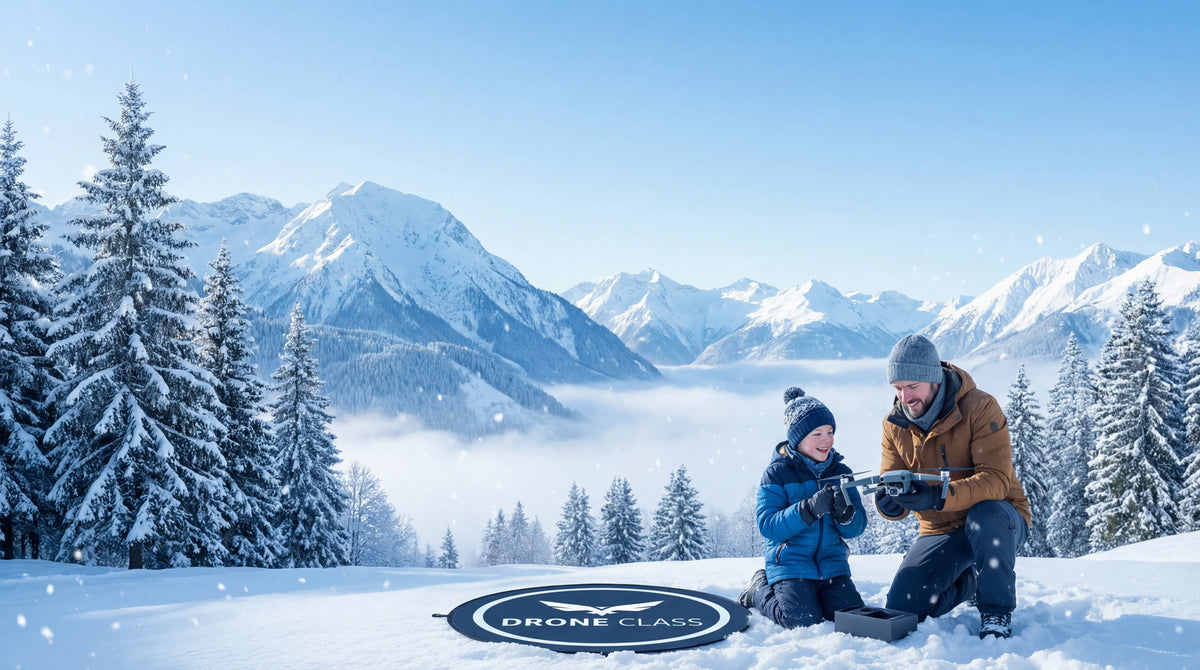

As the winter months make their appearance, opportunities for beautiful winter drone shots open up. When flying your drone in winter conditions, you may face challenges. If you will be taking your drone out this winter during winter sports or when winter weather is in the Netherlands, read our five tips for drone flying in winter conditions first.
Flying a drone in winter: the tips at a glance
Here is how to fly safely in the cold and capture the best winter footage.
1. Warm up the drone batteries
It's not your drone but the batteries that have trouble functioning in cold temperatures. Therefore, always store your batteries in a warm place, such as in your car or jacket pocket. Place the batteries in the drone just before you take off. When you have taken off, it is best to let the drone hover for 60 seconds to allow the battery to warm up. Keep in mind that in cold temperatures, flight time decreases slightly.

Not sure which drone license you need?
Choose your drone, or its weight or class label, and see right away which certificate you need.
2. Avoid flying in (thick) fog
According to European legislation, it is only allowed to fly VLOS in the open category. This means you must always fly the drone in direct vision. It is not allowed to fly in or above thick fog that prevents you from seeing your drone. Fog causes a lot of water on the drone. With cold temperatures, the fog can also create ice crystals on the propellers and camera. This can damage the drone. We therefore recommend avoiding fog altogether.

3. Avoid condensation after drone flying
When you have flown your drone in the cold, condensation can form on the drone and controller after flying. This happens when you take your drone in a warm car or store it in a warm place in the house after your flight. The best advice is to warm up the drone slowly and dry it off a few times before storing it.

4. Use a landing pad
Taking off from a cold or wet surface is not optimal. We therefore recommend using a landing pad. You can take off and land more easily on level ground or in snow. In addition, it is good to have an alternative landing spot behind you, should the weather conditions be challenging.

5. Keep yourself warm
Use gloves so that your hands and fingers do not cramp due to the cold. Gloves are available that allow you to continue using the controller's touch screen. It is allowed to fly the drone from a car. However, you must fly the drone in direct vision.

General tips for drone flying
In whatever weather you go flying, always make sure you have the following items in order:
- Adhere to European drone rules for drone flights
- Register yourself as an operator and apply the number visibly to the drone and broadcast it when required via Remote-ID
- You must be able to show your EU Drone License, this can be a digital or printed version
Lots of drone fun this winter!
Not sure which drone license you need?
Choose your drone, or its weight or class label, and see right away which certificate you need.